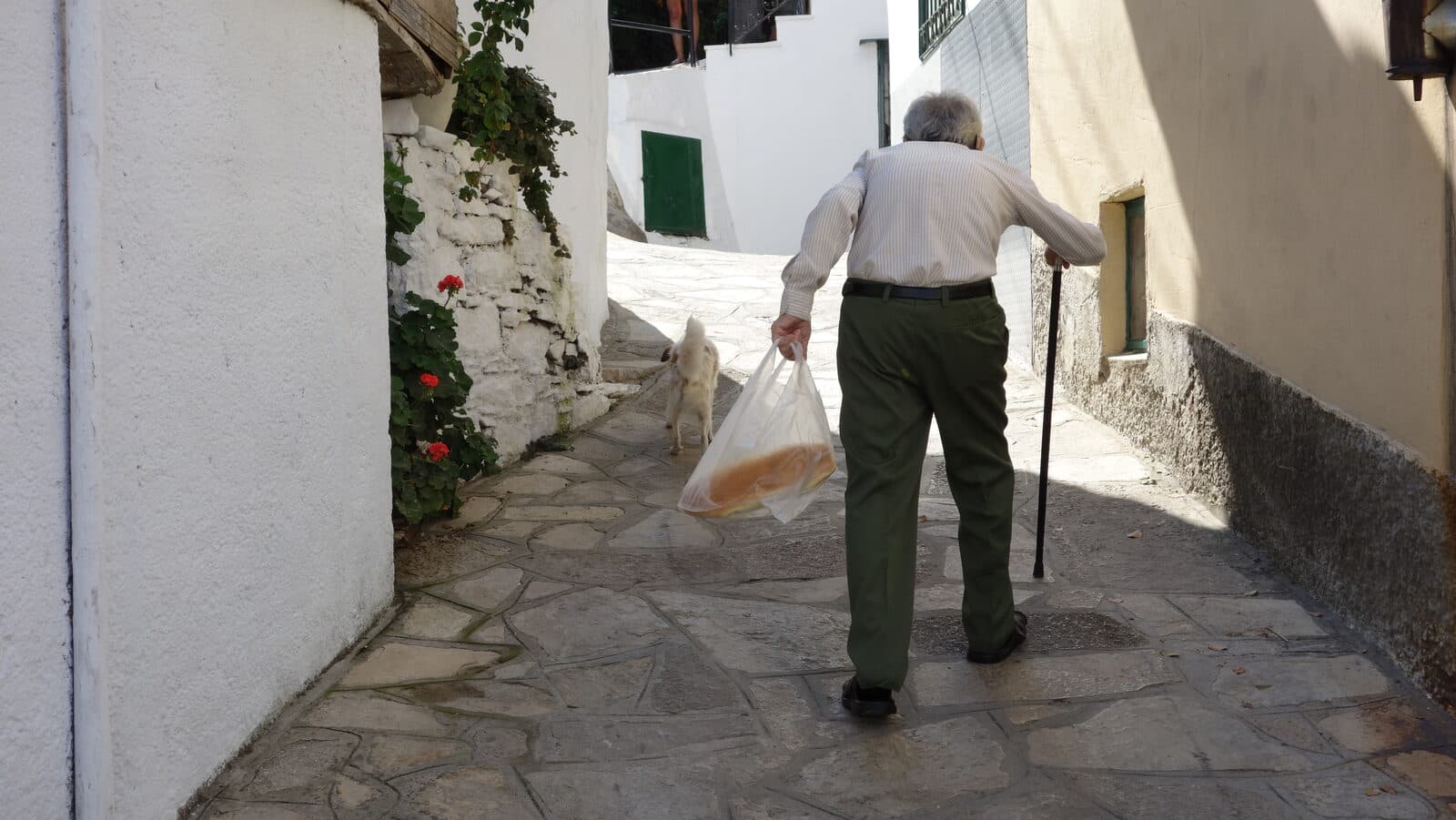
Summarize this article with:
Samos is a mountainous Greek island in the North Aegean, close enough to Turkey to see it from the beach. For visitors it offers a UNESCO World Heritage listing (Pythagoreion and the Heraion), some of the best hiking in the Aegean, a real wine tradition, and a pace that is calmer than the more famous Cycladic islands — without giving up good beaches or a lively harbour town. Still deciding between islands? See how Samos compares to Kos, Mykonos and Lesvos.
For the traveller it is a rare mix: three to four hours by air from northern Europe, a long season of reliable sun, English that works in every tourist-facing business, and a culture that has survived tourism intact. It is neither a party island nor a wilderness — it is a place to see how a working Greek island lives, with good beaches attached. Want a plan built around your dates? Try the Trip Planner.
The essentials at a glance
| Main town | Vathy (Samos Town), population ~6,000; Pythagoreio and Karlovasi are the other two towns |
|---|---|
| Language | Greek; English is widely spoken in hotels, restaurants and tourist businesses |
| Currency | Euro (€) |
| Time zone | Eastern European Time (EET), UTC+2 (UTC+3 in summer) |
| Flight time | About 3–4 hours from most northern European hubs (direct in summer) |
| Airport | Samos International Airport (SMI), on the south-east coast near Pythagoreio |
| Distance to Turkey | ≈1.6–2 km across the Mycale Strait, at the narrowest point |
| Electricity | 230 V, European two-pin plugs (Type C/F) |
| Emergency number | 112 (works across the EU) |
| Peak season | July–August — hottest, busiest and priciest |
| Best for walking | Spring and autumn; in summer the trails are best done early in the morning |
Entry, visas and health
Greece is in the Schengen area, so EU citizens need no visa and many other nationalities can visit visa-free for short stays. Rules vary and change — see our getting-there guide and confirm with your nearest Greek embassy before booking.
EU health cover (EHIC) and the UK GHIC apply for the relevant visitors; everyone should carry travel insurance that covers medical care. Pharmacies (marked with a green cross) are in every town, and the island's main hospital is in Vathy. Dial 112 in an emergency.
Money
Samos uses the euro. Cards are accepted in most hotels, restaurants and shops in the towns, and you will find ATMs in the main towns. Carry some cash for village tavernas, beach bars, buses and small shops, where cards may not be accepted or a machine may be down. Prices are generally lower than on the Cyclades — see what a Samos trip really costs.
Tipping is appreciated but not compulsory: rounding up or leaving around 5–10% at a taverna is typical. Many tavernas add a small per-person cover charge for bread — that's normal, not a trick.
Getting around
A rental car is the most flexible way to see the island, especially for the west coast and the mountain villages, while taxis, buses and organised tours work for a shorter stay based on the east coast. The full breakdown — including drive times from the airport, ferries and the Turkey crossing — is on our getting-there and getting-around page.
If you plan to drive up to Manolates or Mount Kerkis, check your rental insurance covers unpaved and mountain roads — some standard policies exclude them.
Food and drink
Eating on Samos is a highlight and good value: grilled fish and seafood by the harbour, meze to share, fresh salads, and slow-cooked dishes at village tavernas. Lunch is often late and dinner rarely starts before 8 or 9 pm.
The island's signature is its sweet muscat wine, made from grapes grown on terraced hillsides — worth a tasting. Local honey and olive oil make good souvenirs. Try a wine tasting tour or ask a taverna for the local bottle.
Culture and etiquette
Samos is Greek Orthodox, and churches and monasteries expect modest dress — shoulders and knees covered — and quiet. Greeks are warm and relaxed about time; a friendly greeting matters, and a few words of Greek (kalimera for good morning, efharisto for thank you) go a long way, particularly in mountain villages. Shops in smaller places may close in the afternoon, and things are quieter on Sundays and around religious holidays such as 15 August.
Safety
Samos has a low crime rate and is one of the safer Greek islands. The realistic risks are practical ones:
- Sun and heat — the strongest sun is midday in July and August. Cover up, drink plenty of water and plan hikes for the morning.
- Roads — narrow, winding mountain roads and scooters are where most accidents happen. Take your time.
- Wildfires — summer fires are a risk across Greece. Follow local instructions and never light fires outdoors.
- Sea and wind — strong winds (the meltemi) can create rough water, and sea urchins live on rocky shores; water shoes help.
- Hiking — trails can be poorly marked and there is little water on the way. Read our Mount Kerkis guide before you go.
What to pack
- Good walking shoes — the UNESCO site and mountain villages involve uneven ground or steps
- High-factor sunscreen and a hat; the Aegean sun is strong even in shoulder season
- A light layer for evenings in the hills (Manolates, Mount Kerkis foothills)
- A reusable water bottle — refill points are common
- Modest clothing (shoulders and knees covered) for visiting churches and monasteries
- Water shoes for the pebble beaches around Kokkari and for rocky entries
- A swimsuit and quick-dry towel; many beaches have no facilities
- A European plug adapter if you're coming from the UK, US or elsewhere
- Your driving licence (and an International Driving Permit if yours requires one) if you plan to rent a car
- Insect repellent for evenings by the sea or in the hills
- A small daypack for boat days and hikes
- Some cash in small notes for village tavernas, beach bars and buses
A typical week
A pattern that works well for a first seven-night trip, keeping plenty of beach time. Want it tailored to your own dates? Use the Trip Planner.
| Day 1 | Arrive, settle in, and take an evening stroll on the harbour. Keep the first day light. |
|---|---|
| Day 2 | Pythagoreio: the harbour, castle and statue, then the Heraion and the Eupalinos Tunnel. |
| Day 3 | Beach day around Kokkari — Tsamadou and Lemonakia — with dinner by the harbour. |
| Day 4 | Up into the hills: Manolates and its trails, then the shaded Potami Waterfalls. |
| Day 5 | A day on the water: an east-coast boat trip with swim stops, or a private charter. |
| Day 6 | Vathy and its archaeological museum, then a wine tasting of local muscat. |
| Day 7 | A slow morning, a last swim, and the transfer to the airport. |
Tours that fit this trip
See all tours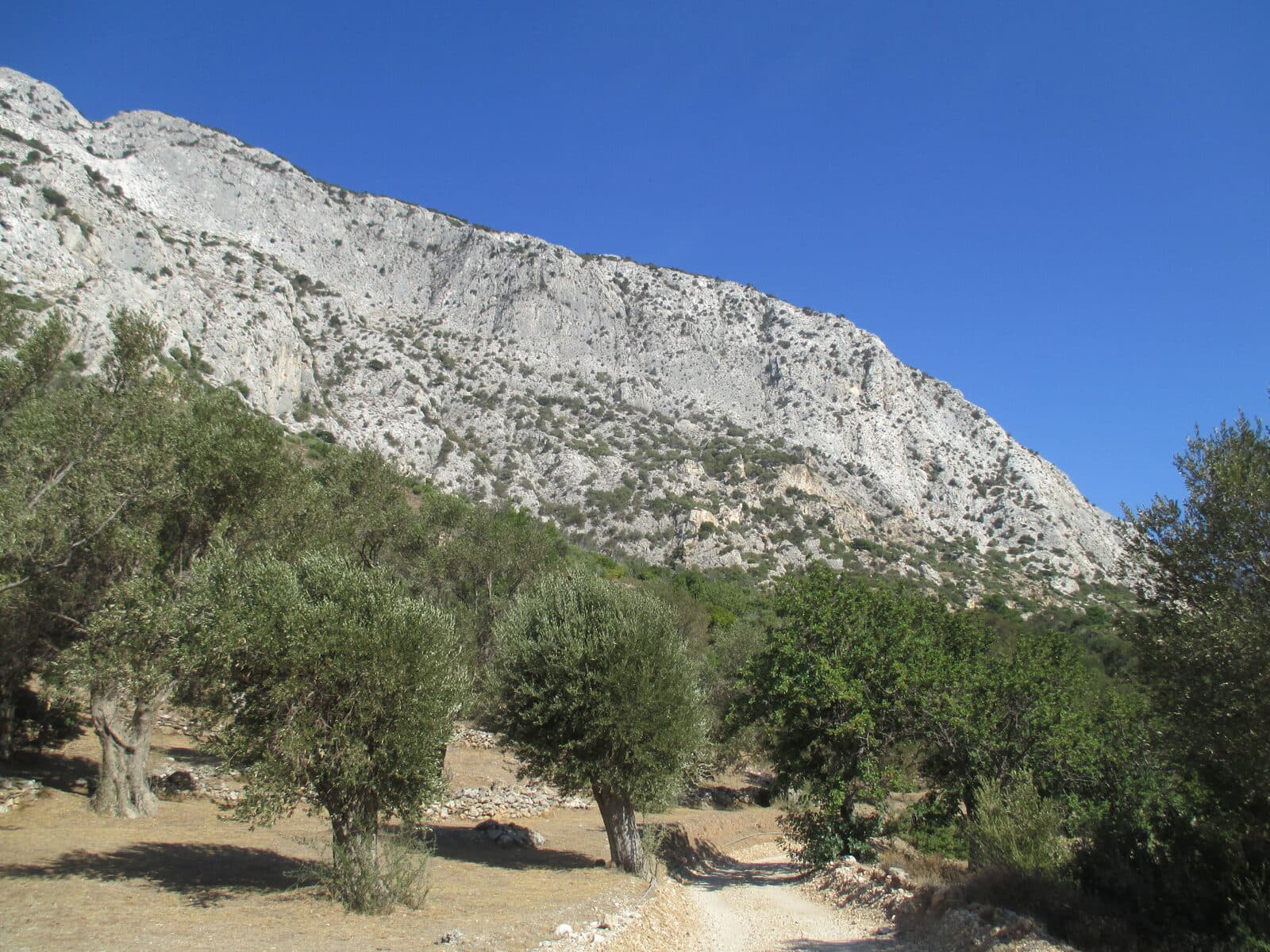 Full-day tourfrom US$69
Samos: Full-Day Island Bus Tour (Starting from West Samos)
- Focuses on the quieter west coast: Karlovasi, Manolates, Mount Kerkis foothills
- A guided loop with hotel pickup included
Best for: First-timers who want the west coast highlights in one organised day
Check price & availability →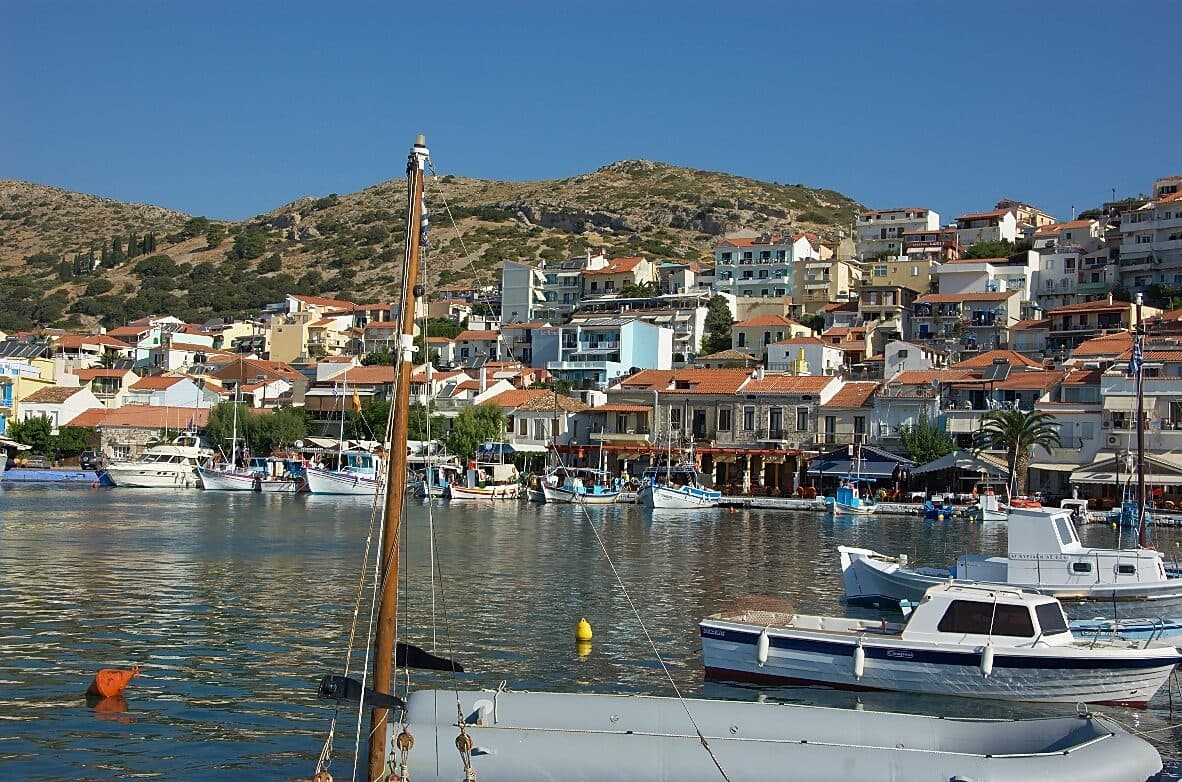 Top pickfrom US$58
Samos: East Coast Boat Trip with Lunch and Drinks
- Samos' best-reviewed boat trip on GetYourGuide
- Lunch and drinks included, swim stops along the east coast
Best for: First-timers, anyone who wants one easy, well-reviewed day out
Check price & availability →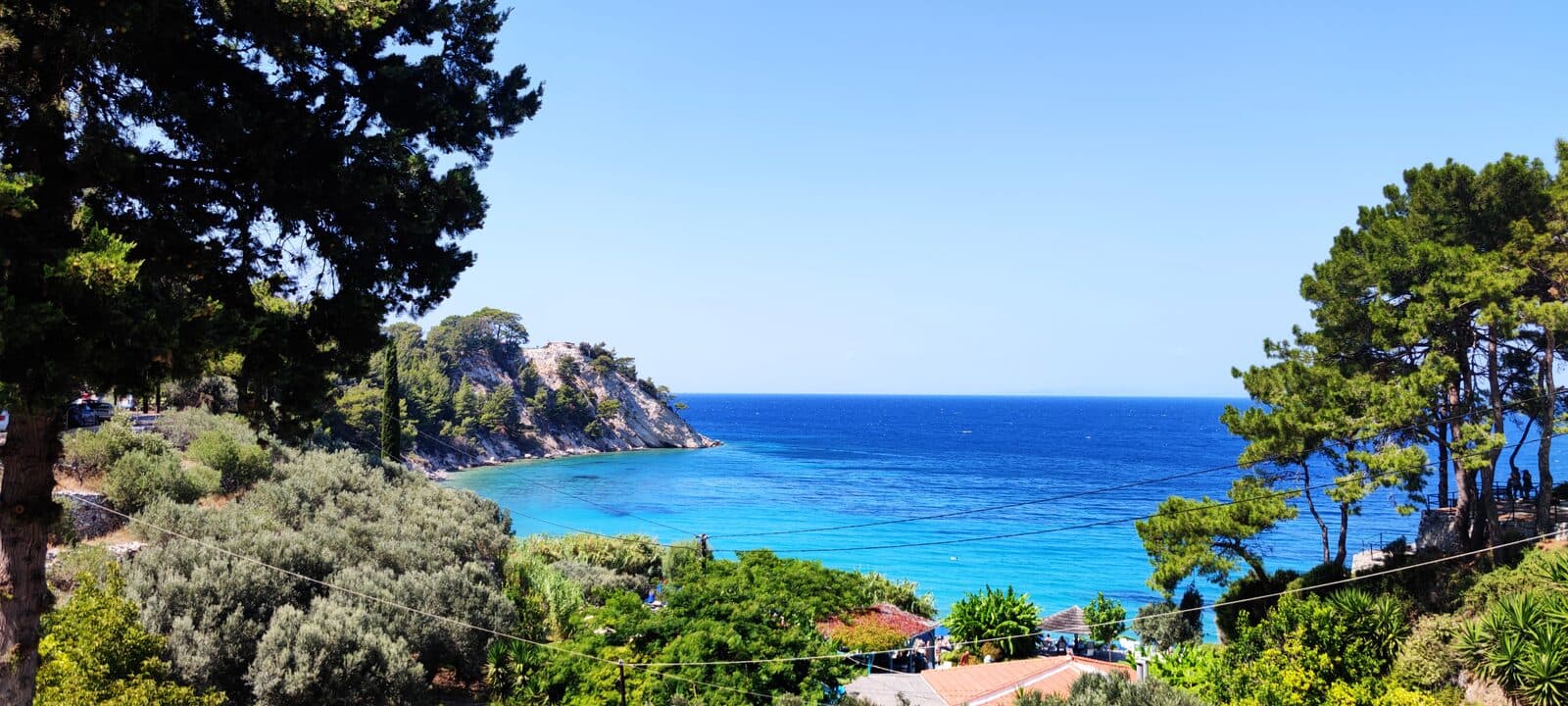 Wine tastingfrom US$22
Samos: Wine Tasting at Kostaki Organic Winery
- Organic winery near Karlovasi, on the quieter north coast
- Small-group tasting, easy to combine with a west-coast day
Best for: Wine lovers already exploring the Karlovasi / west coast area
Check price & availability →Keep planning
Trip Planner
A day-by-day plan for your dates
Getting There
Flights, ferries and getting around
Where to Stay
Every coastal base, compared
Is Greece Expensive?
A real Samos budget, with a calculator
Still have a question? Browse every Samos FAQ →
Frequently asked questions
Yes — Samos combines a UNESCO World Heritage listing (Pythagoreion and the Heraion), genuinely good hiking on Mount Kerkis, a real wine tradition (Samos muscat) and Aegean beaches, all without the crowds or prices of the Cyclades. It suits travellers who want culture, walking and quieter beaches more than nightlife.
Compare Samos with Kos, Mykonos and LesvosYes, in hotels, restaurants and tourist-facing businesses in Vathy, Pythagoreio and Kokkari. It's less consistent in smaller mountain villages, where a few words of Greek are appreciated.
Compare Samos' coastal basesThe euro. Cards are widely accepted in towns and larger hotels, but carry some cash for tavernas, buses and small village shops.
See a real Samos budget breakdownYes — Samos has a low crime rate and is considered one of the safer Greek islands. The main practical risks are sun exposure, uneven paths on hikes, mountain roads that require care when driving, and summer wildfire risk.
Flights, ferries and getting aroundGenerally cheaper than the Cyclades (Santorini, Mykonos). Tavernas, local buses and mid-range hotels are noticeably better value; car rental and boat tours are priced similarly across the Aegean.
Get the full budget breakdownFour to five days covers the highlights; a week lets you add a boat day, the hiking and a slower pace. Our Trip Planner builds a day-by-day plan for however long you have.
Build your day-by-day itineraryIt is generally considered fine in most places, but taste and quality vary by village, and bottled water is cheap and widely sold. If in doubt, ask your accommodation.
See when to visitPractical details change — verify before you go. Last updated September 2026.